
👍 Pros
- Robust build with sapphire crystal and titanium frame, offering enhanced durability.
- Comprehensive cellular connectivity including 5G, ensuring broad network access.
- Advanced health monitoring features such as ECG and a depth gauge for diverse activities.
- High-brightness Retina LTPO3 OLED display with 2000 nits peak brightness for excellent visibility.
👎 Cons
- The S10 chipset, released in 2025, may exhibit performance limitations against newer 2026 smartwatch processors.
- Battery life specifications are not provided, making it difficult to assess endurance.
- Internal storage is limited to 64GB, which may be restrictive for extensive app and media storage over time.
Expert Review & Rating
Detailed Analysis
Design & Build
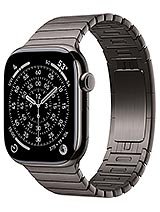
The Apple Watch Series 11, released in September 2025, presents a robust and refined aesthetic. Its construction features a sapphire crystal front, a ceramic or sapphire crystal back, and a grade 5 titanium frame, contributing to both its premium feel and durability. With dimensions of 46 x 39 x 9.7 mm and weighing 34.6 g (42mm) or 43.1 g (46mm), it maintains a substantial yet wearable profile. The device is IP6X certified for dust resistance and water-resistant up to 50 meters, making it suitable for various environments and activities. The inclusion of an eSIM facilitates standalone cellular connectivity.
Performance & Health Tracking
Underpinning the Series 11 is the Apple S10 dual-core chipset, operating on watchOS 26, with a planned upgrade to watchOS 27. While capable at its 2025 release, in the current year of 2026, this processor may face increasing competition from newer, more optimized chipsets in contemporary smartwatches, potentially impacting long-term performance demands. The device features a 1.96-inch Retina LTPO3 OLED display with a resolution of 496 x 416 pixels and a peak brightness of 2000 nits, ensuring excellent visibility even in direct sunlight. Health tracking capabilities are comprehensive, including ECG certification (region-dependent software application) and a depth gauge accurate to 6 meters, catering to a range of health and fitness monitoring needs.
Battery Life
Specific battery capacity details for the Apple Watch Series 11 are not provided in the available data. This omission makes a direct assessment of its endurance challenging. Users should anticipate typical Apple Watch battery performance, which generally necessitates daily charging depending on usage patterns and activated features. The efficiency of the S10 chipset and watchOS 26 would influence actual battery longevity, but without concrete figures, this remains an area requiring further information.
Verdict
As of 2026, the Apple Watch Series 11 remains a highly capable smartwatch, particularly for users within the Apple ecosystem. Its premium build, advanced display, and extensive health monitoring features are significant advantages. The inclusion of 5G connectivity ensures future-proof network access. However, the S10 chipset, being a 2025 release, might not offer the same performance headroom as the latest 2026 processors. The absence of specific battery life metrics is a notable drawback for prospective buyers. For individuals prioritizing robust construction, comprehensive health tracking, and seamless integration with Apple services, the Series 11 is a strong contender, provided the potential for a slightly less cutting-edge processor in 2026 is acknowledged. Those seeking the absolute latest in processing power or requiring explicit battery life guarantees might consider newer models.
Frequently Asked Questions (FAQs)
💡 The S10 chipset, released in 2025, was competitive at its launch. In 2026, while still functional, it may not match the performance of newer, more optimized processors found in smartwatches released during the current year.
💡 The Apple Watch Series 11 features a sapphire crystal front, a ceramic or sapphire crystal back, and a grade 5 titanium frame. It is also IP6X certified for dust resistance and water-resistant up to 50 meters.
💡 Yes, the Apple Watch Series 11 supports 5G connectivity, alongside GSM, HSPA, and LTE, providing comprehensive cellular network access.