
👍 Pros
- Robust build with sapphire crystal, ceramic/sapphire crystal back, and grade 4 titanium frame
- High water resistance (100m/10ATM) and MIL-STD-810H compliance
- ECG certification for advanced health monitoring
- Comprehensive 4G LTE band support for extensive connectivity
- High-resolution Super AMOLED display with sapphire crystal protection
👎 Cons
- Released in 2024, the chipset and OS are not the latest available in 2026
- Weight of 60.5g may be noticeable for some users
- Price depends on region and retailer, making direct comparisons difficult
Expert Review & Rating
Detailed Analysis
Design & Build
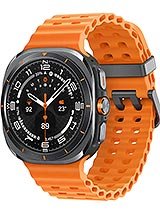
The Samsung Galaxy Watch Ultra, released in July 2024, presents a robust and premium construction. Its dimensions of 47.4 x 47.4 x 12.1 mm and a weight of 60.5 g indicate a substantial presence on the wrist. The device features a sapphire crystal front, a ceramic/sapphire crystal back, and a grade 4 titanium frame, underscoring its durability. It incorporates an eSIM for cellular connectivity and boasts an IP68 rating, allowing submersion up to 100 meters (10ATM) for 10 minutes, alongside MIL-STD-810H compliance. The inclusion of ECG certification further enhances its health monitoring capabilities, positioning it as a resilient and medically aware wearable.
Performance & Health Tracking
At its core, the Galaxy Watch Ultra is powered by the Exynos W1000 chipset, a 3 nm Penta-core processor with a Mali-G68 GPU. While this configuration delivered strong performance upon its 2024 release, by 2026 standards, newer chipsets may offer enhanced efficiency and processing power. The device runs on Android Wear OS 5, upgradable to 6.0, with Samsung’s One UI Watch 8 interface. This software ecosystem provides access to a broad range of applications and features. For health tracking, the ECG certification is a significant advantage, offering advanced heart health monitoring. The internal memory options of 32GB or 64GB, both with 2GB RAM, provide ample storage for applications and data.
Battery Life
Specific battery capacity details for the Samsung Galaxy Watch Ultra were not provided in the raw data. However, given its robust feature set and the typical power demands of a high-end smartwatch with LTE connectivity, battery performance would be a critical factor for users. Without explicit data, it is difficult to assess its longevity relative to current 2026 smartwatch offerings. Users should consult official Samsung specifications or independent reviews for detailed battery life benchmarks.
Verdict
As of 2026, the Samsung Galaxy Watch Ultra remains a highly capable smartwatch, particularly for users prioritizing durability, advanced health features like ECG, and comprehensive cellular connectivity. Its premium build materials and high water resistance are notable strengths. However, its 2024 release means that its Exynos W1000 chipset and Android Wear OS 5 (upgradable to 6.0) are not the absolute latest available. While still performing competently, those seeking the bleeding edge of smartwatch technology in terms of raw processing power or the newest OS iterations might consider more recent releases. For individuals valuing a robust, feature-rich, and reliable smartwatch with a proven track record, the Galaxy Watch Ultra represents a solid, albeit not cutting-edge, investment. The purchasing decision should weigh its enduring build quality and health monitoring against the availability of newer, potentially more performant, alternatives.
Frequently Asked Questions (FAQs)
💡 Released in 2024, the Exynos W1000 (3 nm) chipset and Android Wear OS 5 (upgradable to 6.0) provide competent performance. However, by 2026, newer smartwatches may feature more advanced processors and operating system versions, potentially offering greater efficiency or additional features.
💡 The Galaxy Watch Ultra is constructed with a sapphire crystal front, ceramic/sapphire crystal back, and a grade 4 titanium frame. It is IP68 rated for water resistance up to 100m (10ATM) for 10 minutes and is MIL-STD-810H compliant, indicating a high level of physical resilience.