
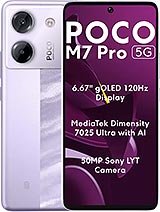
👍 Pros
- AMOLED display with 120Hz refresh rate and high peak brightness
- Relatively large 5110 mAh battery capacity
- Gorilla Glass 5 protection on the display
- OIS on the main 50 MP camera for enhanced stability
- Decent software upgrade policy for Android (up to 4 major updates in EU)
👎 Cons
- Mediatek Dimensity 7025 Ultra (6 nm) is an older mid-range chipset by 2026
- 1080p@30fps video recording limitation for both cameras
- Shared SIM slot for microSDXC expansion
- Plastic build materials for the back and frame
- 45W wired charging is not exceptionally fast compared to 2026 standards
Expert Review & Rating
Market Position in 2026
In 2026, the Xiaomi Poco M7 Pro 5G positions itself as a budget-friendly option, primarily viable on the used or refurbished market. Its hardware, particularly the Mediatek Dimensity 7025 Ultra chipset, has aged, placing it below current mid-range offerings in terms of raw performance and efficiency.
Performance & Daily Usage
Based on the Mediatek Dimensity 7025 Ultra (6 nm) chipset, daily usage in 2026 for the Poco M7 Pro 5G would likely involve some limitations for demanding applications. UI responsiveness for basic tasks should remain acceptable, but more intensive games or multitasking with numerous apps could exhibit noticeable slowdowns. Thermal management is expected to be adequate for its performance tier, as the 6nm process is relatively mature.
The Compromises
The primary compromise on the Poco M7 Pro 5G is its Mediatek Dimensity 7025 Ultra (6 nm) chipset, which by 2026 is a generation or two behind current budget and mid-range processors, impacting overall speed and future-proofing. The 1080p@30fps video recording limit for both main and selfie cameras is a significant drawback, falling short of the 4K or higher frame rate options common even in budget phones of 2026. The plastic build for the back and frame, while reducing cost, offers less premium feel and potentially less durability than glass or metal alternatives. Additionally, the shared SIM slot for microSDXC expansion means users must choose between dual SIM functionality or expandable storage.
The Best Features
The 6.67-inch AMOLED display with a 120Hz refresh rate and 2100 nits peak brightness is a notable strength. This combination provides vibrant colors, deep blacks, and smooth scrolling, enhancing the visual experience for media consumption and general navigation. The inclusion of OIS (Optical Image Stabilization) on the 50 MP main camera is a significant advantage, helping to reduce blur in photos and stabilize video footage, which is not always present in phones at its original price point. The 5110 mAh battery capacity, paired with the 6nm chipset, suggests reliable all-day endurance for average tasks, offering practical benefit for users who prioritize battery life.
Buying Advice
The Poco M7 Pro 5G is a pragmatic choice in 2026 for users seeking an affordable, used device primarily for basic communication, media consumption, and light productivity. However, those prioritizing cutting-edge performance, advanced camera capabilities, or faster charging speeds should explore newer budget or mid-range smartphones.
Frequently Asked Questions (FAQs)
In 2026, the Poco M7 Pro 5G can be a worthwhile purchase on the used or refurbished market for users with conservative performance expectations and a tight budget. Its display and battery capacity remain competitive for its price tier, but the chipset's age means it will not match the speed of contemporary devices.
The 50 MP main camera with OIS and a relatively wide f/1.5 aperture suggests it can capture more light than many budget sensors, potentially offering acceptable low-light performance for stills. However, the 1080p@30fps video limitation means its video capabilities, especially in challenging lighting, will be constrained compared to modern alternatives.