
👍 Pros
- Robust build quality featuring sapphire crystal and grade 5 titanium frame
- High-brightness LTPO3 OLED display with 2000 nits peak luminance
- Comprehensive health monitoring suite including ECG, SpO2, and body temperature
- Advanced water resistance with depth gauge to 6 meters
👎 Cons
- Battery life of approximately 18 hours is below average for 2026 smartwatch standards, requiring daily charging
- The dual-core CPU, while functional, may present limitations for future demanding applications compared to multi-core advancements in 2026
- 64GB internal storage, while adequate, is not expandable and may be restrictive for extensive offline media or application libraries in 2026
Comprehensive Review & Rating
Detailed Analysis
Design & Build
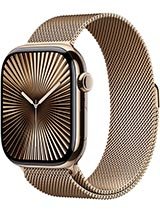
The Apple Watch Series 10, launched in 2024, presents a robust and refined aesthetic. Its construction features a sapphire crystal front, a ceramic/sapphire crystal back, and a grade 5 titanium frame, contributing to both durability and a premium feel. The device is IP6X certified and boasts 50-meter water resistance, further enhanced by a depth gauge capable of measuring up to 6 meters. These specifications ensure resilience in various environments, aligning with high-end smartwatch expectations for 2026.
Display & Performance
The 1.96-inch Retina LTPO3 OLED display, with a peak brightness of 2000 nits, delivers exceptional clarity and visibility, even in direct sunlight. Its 496 x 416 pixel resolution provides a sharp visual experience. Powering the device is the Apple S10 SiP with a dual-core CPU, running watchOS 11, with planned upgrades to watchOS 27. While the display remains competitive in 2026, the dual-core processor, though efficient, may exhibit limitations when handling more intensive applications or multitasking demands that have become prevalent in contemporary smartwatch ecosystems.
Health Tracking & Battery
The Series 10 integrates an extensive array of health and motion sensors, including an accelerometer, gyroscope, heart rate monitor, barometer, always-on altimeter, compass, SpO2, VO2max, body temperature, and water temperature sensors. The ECG certification further solidifies its position as a comprehensive health monitoring device. However, a significant consideration in 2026 is the battery life. With a 327 mAh capacity yielding approximately 18 hours of use, the Series 10 necessitates daily charging, which is notably below the multi-day endurance offered by several competitors in the current market.
Final Verdict
For consumers in 2026 prioritizing a premium build, a vibrant display, and an extensive suite of health tracking features within the Apple ecosystem, the Apple Watch Series 10 remains a viable option. Its robust design and comprehensive sensor package are strong points. However, the relatively short battery life, requiring daily recharging, and the dual-core processor, which may not keep pace with future software demands, are critical considerations that position it as a device that, while still functional, is beginning to show its age against the evolving standards of 2026 smartwatches. Prospective buyers should weigh these factors against the current market offerings.
Frequently Asked Questions (FAQs)
💡 No, the Apple Watch Series 10's battery life of approximately 18 hours is below average for 2026 smartwatch standards, with many competitors offering multi-day endurance.
💡 Yes, it includes a comprehensive suite of health sensors such as ECG, SpO2, heart rate, body temperature, and VO2max, providing advanced health tracking capabilities.
💡 The Apple Watch Series 10 features a premium build with a sapphire crystal front, ceramic/sapphire crystal back, and a grade 5 titanium frame, offering significant durability and water resistance up to 50 meters.