
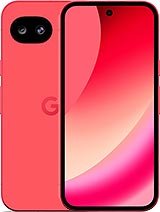
👍 Pros
- Extended software support with 7 major Android upgrades, exceeding typical mid-range offerings.
- High-brightness P-OLED display with 3000 nits peak brightness, competitive in its segment.
- Generous 5100 mAh battery capacity, suggesting strong endurance.
👎 Cons
- Plastic back construction, a potential cost-cutting measure compared to full glass designs seen in some rivals.
- Absence of a telephoto lens, limiting photographic versatility compared to some competitors.
- Relatively modest 30W wired charging speed, slower than some direct competitors.
Expert Review & Rating
Market Position in 2026
In 2026, the Google Pixel 10a enters a fiercely contested mid-range segment. Based on its specifications, it aims to differentiate itself through Google’s proprietary Tensor G4 chipset and a commitment to extended software longevity, promising seven major Android upgrades. This level of software support is a significant value proposition, often exceeding what competitors like Samsung’s A-series or Xiaomi’s Redmi line offer at a similar price point. The inclusion of a high-refresh-rate P-OLED display with exceptional peak brightness also positions it competitively against devices that might opt for less vibrant LCD panels or lower peak brightness figures.
Hardware & Performance Analysis
The Google Pixel 10a is powered by the Google Tensor G4 (4 nm) chipset. Looking at the architecture, the octa-core CPU, featuring a 3.1 GHz Cortex-X4 core, suggests a focus on strong single-core performance for demanding applications, while the accompanying Cortex-A720 and Cortex-A520 cores handle efficiency and background tasks. The Mali-G715 MP7 GPU is designed to manage graphical workloads, indicating a capability for modern gaming and multimedia consumption. Paired with 8GB of RAM across both storage variants, the device theoretically offers sufficient memory bandwidth for fluid multitasking and app management. This combination, on paper, should deliver a responsive user experience, consistent with other devices leveraging flagship-tier chipsets from the previous generation in this price bracket.
Strengths on the Spec Sheet
One significant strength of the Pixel 10a is its display. The 6.3-inch P-OLED panel, featuring a 120Hz refresh rate and an impressive 3000 nits peak brightness, stands out. This brightness level, particularly the 2000 nits HBM (High Brightness Mode), ensures excellent visibility even in direct sunlight, a feature often reserved for more premium devices. For comparison, many mid-range phones in 2026 might still cap out around 1200-1500 nits peak brightness. Another compelling aspect is the 5100 mAh battery capacity. This is a substantial cell for a device of this size, suggesting strong battery life that could comfortably last a full day or more for many users, potentially outperforming rivals with smaller batteries in similar form factors.
Technical Trade-offs
To achieve its price point, Google has made some evident technical trade-offs. The most apparent is the plastic back construction. While the Gorilla Glass 7i front and aluminum frame provide durability where it matters most, a plastic back can feel less premium than the glass backs found on some competitors, such as certain Samsung or Xiaomi models in the same tier. This choice theoretically affects the tactile experience and perceived build quality. Another area of compromise is the camera setup, specifically the absence of a dedicated telephoto lens. While the 48 MP main sensor with OIS and a 13 MP ultrawide are competent, the lack of optical zoom limits the phone’s versatility for distant subjects, a feature increasingly common in the mid-range as manufacturers push for more comprehensive camera systems. Lastly, the 30W wired charging, while not slow, is not class-leading. Many competitors offer 45W, 67W, or even faster charging solutions, meaning the Pixel 10a will take longer to fully charge than some of its direct rivals.
Buying Advice & Verdict
The Google Pixel 10a, in 2026, appears to be a compelling option for users who prioritize software longevity, a vibrant display, and reliable battery life within a mid-range budget. Its commitment to seven major Android upgrades means this device will remain current and secure for an extended period, making it ideal for those who hold onto their phones for several years. The Tensor G4 chipset, while not the absolute bleeding edge, should provide a smooth and responsive experience for everyday tasks and moderate gaming. However, if a premium build with a glass back is a priority, or if you frequently use optical zoom for photography, alternatives offering those features might be more suitable. Similarly, users demanding the absolute fastest charging speeds might find the 30W wired charging a slight limitation. For someone looking for a robust, long-supported Android experience without breaking the bank, the Pixel 10a presents a strong case.
Frequently Asked Questions (FAQs)
With the Google Tensor G4 chipset and the promise of 7 major Android upgrades, you’re looking at a device designed for long-term use. The hardware should comfortably handle typical applications and even some demanding tasks for at least 3-4 years, especially with continuous software optimizations from Google. After that, you might notice some slowdowns with newer, more resource-intensive apps, but it won’t be obsolete.
Based on the Tensor G4’s 4 nm fabrication process and its CPU/GPU configuration, it’s designed for sustained performance. While any chipset will generate heat under prolonged heavy load, especially with intensive gaming, the Tensor G4 is architected to manage this. We’d expect it to maintain playable frame rates in most modern titles without immediate or severe thermal throttling, though extended sessions might see some performance reduction to manage temperatures, a common characteristic across most smartphones.