
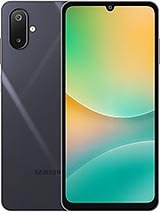
👍 Pros
- Large display size for media consumption
- Reliable all-day battery capacity
- Four major Android upgrades (up to Android 19) for extended software support
- Dedicated microSDXC slot (shared SIM slot) for expandable storage
👎 Cons
- Lower resolution display (720p) for its size, resulting in lower pixel density
- PLS LCD display type, lacking the contrast and vibrancy of AMOLED panels
- Mediatek Dimensity 6300 chipset offers modest performance for 2026 standards
- Basic camera setup without OIS or ultrawide lens
- Plastic build materials may feel less premium compared to glass or metal alternatives
Expert Review & Rating
Market Position in 2026
In 2026, the Samsung Galaxy M06 positions itself squarely in the entry-level or refurbished market. Its hardware, while competent at launch, now faces stiff competition from newer budget offerings that boast more advanced chipsets and display technologies.
The Best Features
The most compelling feature of the Galaxy M06 is its 5000 mAh battery, which, even in 2026, should comfortably provide reliable all-day endurance for light to moderate users. The promise of up to four major Android upgrades, extending to Android 19, means the device benefits from extended software longevity, a significant advantage for a budget phone. The 6.74-inch display, despite its resolution, offers ample screen real estate for media consumption. The inclusion of a microSDXC slot (shared with a SIM slot) provides flexible storage expansion, which is beneficial for users with large media libraries.
The Compromises
The primary compromises lie in its display and performance. The 720p PLS LCD, while large and 90Hz, offers a lower pixel density (260 ppi) and less vibrant colors compared to the AMOLED panels common even in budget phones by 2026. The Mediatek Dimensity 6300 chipset, built on a 6nm process, delivers modest performance; it will handle basic tasks and light applications adequately but will struggle with demanding games or complex multitasking compared to contemporary alternatives. The camera system, featuring a 50 MP main sensor without OIS and a basic 8 MP selfie camera, is functional for general use but lacks the versatility and low-light capabilities found in more advanced systems. The plastic build, while durable, does not offer a premium feel.
Performance & Daily Usage
Based on the hardware, the Mediatek Dimensity 6300 provides sufficient power for everyday communication, social media, and web browsing. UI responsiveness within One UI Core 7.0 should be acceptable for basic navigation. Thermal management, given the chipset’s efficiency, is unlikely to be a significant concern for typical usage. The 5000 mAh battery, combined with the efficient 6nm chipset and 720p display, suggests excellent battery life for its class. The 50 MP main camera will capture decent photos in well-lit conditions, but detail may suffer in challenging light, and video recording is limited to 1080p@30fps. The 8 MP selfie camera is suitable for casual video calls and social media snaps. The 90Hz display will offer a smoother visual experience than 60Hz panels, though the lower resolution is noticeable on a screen of this size.
Buying Advice
For users seeking an extremely affordable secondary device or a primary phone for very light usage and extended software support on the used or refurbished market, the Samsung Galaxy M06 could be a pragmatic choice in 2026. However, those prioritizing display quality, gaming performance, or advanced camera features should explore newer budget smartphones that offer more competitive specifications.
Frequently Asked Questions (FAQs)
In 2026, the Samsung Galaxy M06 is primarily viable as a budget-conscious purchase on the used or refurbished market, especially for users prioritizing battery life and extended software updates over cutting-edge performance or display quality. For new purchases, more modern budget phones offer better overall value.
Based on the 50 MP main sensor with an f/1.8 aperture and the absence of OIS (Optical Image Stabilization), the camera is likely to struggle in low-light conditions, producing softer images with more noise. It is best suited for well-lit environments.