
👍 Pros
- Integrated heart rate monitoring provides basic fitness tracking capabilities.
- The 3 ATM water resistance offers protection against splashes and brief immersion.
- The estimated five-day battery life is competitive for a smartwatch of its era.
👎 Cons
- The proprietary OS and low-power processor are significantly outdated compared to 2026 smartwatch platforms, limiting app availability and advanced functionalities.
- The 1.22-inch LCD display with 240 x 240 resolution is considerably less vibrant and sharp than contemporary AMOLED or OLED screens, impacting user experience.
- The absence of cellular connectivity, GPS, NFC for payments, and SpO2 monitoring renders it functionally limited by 2026 standards.
- Bluetooth 4.2 is an older standard, potentially offering slower data transfer and less efficient power consumption compared to modern Bluetooth versions.
Comprehensive Review & Rating
Detailed Analysis
Design & Build
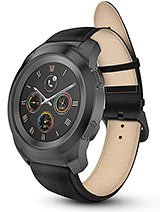
The Allview Allwatch Hybrid S, released in 2018, features a robust design with dimensions of 50.6 x 44 x 14.6 mm and a weight of 88 g. Constructed from premium materials and offering 3 ATM water resistance, it was designed for durability. While these physical attributes were competitive at its launch, the overall aesthetic and bulk may not align with the sleeker, more integrated designs prevalent in 2026 smartwatches.
Display & Performance
The device incorporates a 1.22-inch LCD display with a resolution of 240 x 240 pixels, resulting in approximately 278 ppi density. In 2026, this display technology is considered significantly dated. Modern smartwatches typically feature higher-resolution AMOLED or OLED panels, offering superior color reproduction, contrast, and brightness, alongside always-on display capabilities. The Allwatch Hybrid S operates on a proprietary OS powered by a low-power wearable processor. This combination, while functional for basic tasks, lacks the fluidity, extensive app ecosystem, and advanced computational capabilities expected from contemporary smartwatch operating systems like Wear OS or watchOS. Responsiveness and multitasking would be notably inferior to current market offerings.
Health Tracking & Battery
Health tracking on the Allview Allwatch Hybrid S is limited to an accelerometer and a heart rate monitor. While these provide fundamental activity and heart rate data, the absence of more advanced sensors such as SpO2, ECG, or body temperature monitoring places it far behind 2026 health-focused smartwatches. The 200 mAh battery is estimated to provide approximately five days of usage. While this duration was respectable in 2018, advancements in power efficiency and larger battery capacities in 2026 mean that many modern smartwatches offer comparable or superior battery life with significantly more features and processing power.
Final Verdict
Considering the Allview Allwatch Hybrid S in 2026, it presents as a technologically obsolete device. Its proprietary OS, basic LCD display, limited sensor suite, and older Bluetooth standard fall short of current industry expectations for performance, functionality, and user experience. While its original price point of approximately $199 was relevant at its launch, investing in this model today would be ill-advised. Consumers seeking a modern smartwatch experience with comprehensive health tracking, robust app support, and a vibrant display should explore contemporary alternatives.
Frequently Asked Questions (FAQs)
💡 While basic Bluetooth connectivity for notifications might function, the proprietary OS and older Bluetooth 4.2 standard may limit full compatibility and advanced feature integration with current Android and iOS versions.
💡 No, the Allview Allwatch Hybrid S is equipped only with an accelerometer and a heart rate monitor. It lacks advanced health tracking capabilities such as SpO2, ECG, or body temperature monitoring, which are common in 2026 smartwatches.
💡 The Allview Allwatch Hybrid S has a 200 mAh battery, providing an estimated battery life of approximately five days under typical usage conditions.