
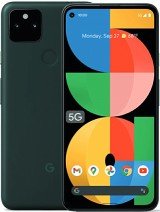
👍 Pros
- OLED display technology provides deep blacks and vibrant colors, a consistent advantage over LCD panels often found in budget devices.
- IP67 dust/water resistance offers a level of durability often reserved for higher-tier smartphones, protecting against common environmental hazards.
- Integrated 5G connectivity ensures compatibility with modern network standards, providing faster data speeds where available, unlike some older budget alternatives.
👎 Cons
- The Snapdragon 765G chipset, while capable at launch, struggles to keep pace with the demands of 2026 applications and operating systems.
- 6GB of RAM is a significant bottleneck for multitasking in 2026, especially when compared to the 8GB or 12GB configurations now standard in mid-range phones.
- 18W wired charging is considerably slower than the 30W, 60W, or even 100W charging solutions prevalent in contemporary smartphones, leading to longer charge times.
Expert Review & Rating
Market Position in 2026
In 2026, the Google Pixel 5a 5G finds itself in a challenging position. Launched in 2021, its hardware, while competent for its era, now contends with significantly more demanding applications and operating system requirements. Modern Android iterations, coupled with increasingly complex social media platforms and streaming services, place a greater strain on processing power and RAM. Devices released in the current year, even in the budget segment, typically feature chipsets with superior generational performance and often double the RAM, leading to a noticeable difference in fluidity and multitasking capabilities. The 5a’s reliance on a 2021-era mid-range SoC means it will likely exhibit slower app load times and less responsive navigation compared to contemporary alternatives.
Technical Trade-offs
To achieve its competitive price point, Google made several calculated trade-offs. The most apparent, looking at the raw data, is the 18W wired charging. While functional, this speed is considerably slower than the 30W, 60W, or even 100W charging solutions now common across various price tiers. This theoretically translates to longer periods tethered to a power outlet, impacting user convenience, especially for those with busy schedules. Another subtle but impactful trade-off is the use of Gorilla Glass 3. While offering a degree of protection, it’s several generations behind the Gorilla Glass Victus or Ceramic Shield found on newer devices, meaning it’s theoretically more susceptible to scratches and drops compared to current market leaders. The absence of a microSD card slot, while a Pixel staple, means the 128GB internal storage is fixed, which can become a limitation for users with extensive photo/video libraries or numerous large applications.
Hardware & Performance Analysis
Based on the hardware, the Qualcomm Snapdragon 765G 5G chipset, fabricated on a 7nm process, was a robust mid-range performer in 2021. Its octa-core CPU, with a prime core at 2.4 GHz, alongside the Adreno 620 GPU, handled most tasks and even some demanding games of its time with reasonable efficiency. However, in 2026, this architecture is less capable of delivering a consistently smooth experience with the latest applications and Android 14. The 6GB of RAM, while sufficient for basic usage, will likely become a bottleneck when juggling multiple applications or running memory-intensive processes. Theoretically, users moving between several apps will experience more frequent app relaunches as the system struggles to keep them all in active memory. The 7nm process, while efficient for its time, is surpassed by the 5nm and 4nm nodes of current chipsets, which offer better power efficiency and raw performance.
Strengths on the Spec Sheet
Despite its age, the Pixel 5a 5G retains a few notable strengths on its spec sheet. The OLED display, with its 1080 x 2400 pixel resolution and HDR support, remains a visual asset. This panel technology consistently delivers deep blacks and vibrant colors, offering a superior viewing experience compared to many budget phones that still utilize LCD panels. This is a clear advantage for media consumption. Secondly, the 4680 mAh battery capacity, combined with the relatively power-efficient 765G chipset (for its era), suggests a respectable battery life for moderate usage, potentially outlasting some newer devices with smaller batteries or less optimized software. Lastly, the inclusion of IP67 dust and water resistance is a significant durability feature. This level of protection, often reserved for higher-priced flagships, provides peace of mind against accidental spills or exposure to dust, a practical benefit that many budget and even some mid-range phones still omit.
Buying Advice & Verdict
The Google Pixel 5a 5G offers a solid OLED display and IP67 water resistance, but its aging Snapdragon 765G and 6GB RAM are significant performance hurdles in 2026. As a device well over 1.5 years old, its primary market is now the used segment. For those seeking a highly affordable, durable smartphone for light usage and who prioritize camera quality over raw processing power, a used Pixel 5a 5G might still hold some appeal, provided the price is exceptionally low. That being said, for anyone expecting modern performance or rapid charging, it falls short of current standards.
Frequently Asked Questions (FAQs)
The primary hidden trade-offs are the 60Hz refresh rate on the display, which feels less smooth than the 90Hz or 120Hz panels common today, and the 18W charging speed, which is quite slow compared to current market offerings. Also, the Gorilla Glass 3 is an older generation, meaning less scratch and drop resistance than newer devices.
Given the 4680 mAh battery and the 7nm Snapdragon 765G, which was reasonably efficient for its time, the Pixel 5a 5G could potentially last a full day of moderate usage in 2026. However, under heavy use with demanding applications, especially with an older battery that has degraded over time, it's less likely to comfortably make it through a full heavy day without a top-up. Modern chipsets offer superior efficiency.