
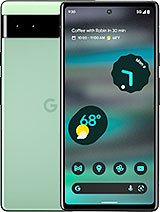
👍 Pros
- Retains strong software support with upgrades up to Android 16.
- Google Tensor chipset still offers competitive AI capabilities for its tier.
- OLED display provides deep blacks and good contrast for media consumption.
👎 Cons
- Gorilla Glass 3 protection is significantly outdated compared to current mid-range offerings.
- 18W wired charging is slow against competitors offering 30W or faster.
- Fixed 60Hz refresh rate on the display limits smoothness compared to 90Hz/120Hz panels common in 2026.
Expert Review & Rating
Market Position in 2026
In 2026, the Google Pixel 6a, originally launched in mid-2022, finds itself in a challenging position. While its Google Tensor chipset still provides a unique blend of AI capabilities and general performance that differentiates it from many Snapdragon-equipped rivals of its original era, newer mid-range devices from brands like Samsung, Xiaomi, and Nothing have significantly advanced in display technology, charging speeds, and overall build quality. Competitors now routinely offer 120Hz AMOLED displays, much faster charging, and more robust protective glass, making the Pixel 6a’s 60Hz OLED and Gorilla Glass 3 feel distinctly dated.
Strengths on the Spec Sheet
Despite its age, the Pixel 6a still presents a few compelling specifications. The Google Tensor (5 nm) chipset, though not a top-tier performer in 2026, was designed with Google’s machine learning in mind. This theoretically allows it to handle on-device AI tasks, such as advanced photo processing and voice commands, with a degree of efficiency that some contemporary mid-range SoCs might struggle to match. Furthermore, the device’s commitment to software longevity, with upgrades up to Android 16 and a total of five major OS updates, ensures it remains functional and secure, a significant advantage over many Android phones from the same launch window. The 6.1-inch OLED display, while lacking a high refresh rate, still delivers excellent contrast and deep blacks, which is a fundamental quality that holds up well for media consumption.
Hardware & Performance Analysis
Based on the hardware, the Google Tensor chipset, with its 2×2.80 GHz Cortex-X1 cores, was a powerful offering at its release. In 2026, this architecture still provides sufficient power for daily applications and moderate multitasking. However, compared to current-generation mid-range chipsets like the Snapdragon 7 Gen 3 or MediaTek Dimensity 8300, its raw CPU and GPU performance will naturally lag. The Mali-G78 MP20 GPU, while capable for 2022 games, will likely struggle with the most graphically intensive titles of 2026 at high settings. The 6GB of RAM, while adequate for general use, may become a bottleneck when running numerous demanding applications simultaneously, potentially leading to more frequent app reloads than devices with 8GB or 12GB of RAM.
Technical Trade-offs
To hit its aggressive price point, Google made several clear trade-offs. The most apparent is the display’s 60Hz refresh rate. In an era where 90Hz and 120Hz are standard even in budget segments, the Pixel 6a’s display will feel less fluid and responsive to users accustomed to higher refresh rates. Another significant compromise is the 18W wired charging. This speed is notably slow by 2026 standards, meaning users will experience considerably longer charging times compared to competitors that often offer 30W, 60W, or even faster solutions. The use of Corning Gorilla Glass 3 for the front protection is also a clear cost-saving measure; newer devices widely employ Gorilla Glass Victus or similar, offering significantly better drop and scratch resistance, theoretically making the Pixel 6a more susceptible to damage from everyday use.
Buying Advice & Verdict
Given that the Google Pixel 6a is now over 1.5 years old, its viability is almost exclusively on the used market. For consumers seeking a compact Android phone with excellent software support (up to Android 16) and Google’s signature computational photography at a very low price, it could still be a reasonable option. The Tensor chip, while not a powerhouse anymore, still delivers a smooth enough experience for general use and retains its AI advantages. That being said, potential buyers must weigh the dated 60Hz display, slow charging, and less robust build materials against its potentially very attractive used market price. If a fluid display and fast charging are priorities, newer used alternatives or entry-level 2026 models might offer a better overall experience, even if they lack the Pixel’s software longevity.
Frequently Asked Questions (FAQs)
If you find the Pixel 6a at a very low used price and prioritize software updates and Google's camera processing over modern features like high refresh rate displays or fast charging, it could still be a decent budget pick. However, if you can stretch your budget even slightly, newer used phones or current entry-level models will offer a significantly more modern experience, especially regarding display smoothness and battery top-up speeds.
Based on the Google Tensor's architecture and its 5nm process, it was designed for a balance of performance and efficiency. For heavy gaming in 2026, while it might run older titles adequately, it will likely struggle with the most demanding current games, potentially leading to noticeable frame rate drops and, theoretically, thermal throttling during extended sessions. Its GPU, the Mali-G78 MP20, is simply not on par with current gaming-focused chipsets.