
👍 Pros
- Extended OS update support to Android 16 provides long-term software relevance.
- OLED, HDR, 90Hz display offers a fluid visual experience for its price point.
- Tensor G2 chipset provides advanced AI capabilities and competitive processing for its release era.
👎 Cons
- 18W wired charging is slow compared to contemporary standards, limiting quick power-ups.
- Corning Gorilla Glass 3 offers less robust scratch and shatter protection than newer generations.
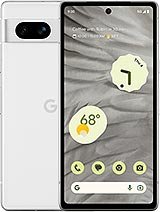
- Plastic back construction reduces perceived premium feel and durability compared to full glass designs.
Expert Review & Rating
Market Position in 2026
In 2026, the Google Pixel 7a, launched in 2023, occupies a budget-to-midrange segment. Its Tensor G2 chipset, while capable for its release year, now competes with newer 3nm and 4nm designs offering greater efficiency and raw performance. The 90Hz OLED display remains a competitive feature against some entry-level devices, though 120Hz is standard in many mid-range offerings. Software support, extending to Android 16, provides a significant advantage over many contemporaries from its launch period.
Technical Trade-offs
The Pixel 7a exhibits clear compromises to achieve its price point. The Gorilla Glass 3 screen protection is a notable cutback; it offers less resistance to scratches and drops compared to Gorilla Glass Victus or newer iterations. This theoretically increases susceptibility to screen damage. The 18W wired charging speed is slow by 2026 standards. A full charge cycle will take significantly longer than devices with 30W, 60W, or faster charging solutions, impacting user convenience. The plastic back, while durable, lacks the premium feel and rigidity of glass or metal constructions found in higher-tier devices. This choice affects both aesthetics and perceived build quality.
Strengths on the Spec Sheet
The device’s OLED, HDR, 90Hz display is a significant strength. This panel type delivers deep blacks and vibrant colors, while the 90Hz refresh rate ensures smoother scrolling and animations compared to standard 60Hz displays. This enhances the visual user experience. The 4385 mAh battery capacity is substantial for a 6.1-inch device. This capacity, combined with Google’s software optimizations, suggests a full day of moderate use is achievable. Furthermore, the commitment to five major OS updates, extending to Android 16, provides exceptional software longevity for a device in its class, ensuring access to new features and security patches for years.
Hardware & Performance Analysis
Based on the hardware, the Google Tensor G2 (5 nm) chipset, with its octa-core CPU including Cortex-X1 cores and Mali-G710 MP7 GPU, provided robust performance in 2023. In 2026, it remains capable for daily tasks and moderate applications. However, its 5nm process node is less efficient than current flagship chipsets. Theoretically, sustained heavy workloads may lead to thermal management considerations. The 8GB of RAM is sufficient for multitasking, allowing multiple applications to remain active without frequent reloads. The integrated Tensor Processing Unit (TPU) within the G2 architecture facilitates on-device AI operations, enhancing features like computational photography and voice processing.
Buying Advice & Verdict
The Pixel 7a offers exceptional software longevity balanced against slow charging speeds. For the used market in 2026, its continued OS support makes it a viable option for users prioritizing software updates and a capable camera at a reduced cost.
Frequently Asked Questions (FAQs)
The primary trade-offs are the use of Gorilla Glass 3 for screen protection, which is less durable than newer versions, and the 18W wired charging, which is slow by current standards. The plastic back also represents a material cost saving.
Looking at the architecture, the Tensor G2, being a 5nm chip from 2023, will likely exhibit performance throttling under sustained heavy gaming loads in 2026. While capable for many games, it is not designed for prolonged, peak-performance gaming sessions compared to current-generation gaming-focused chipsets.