
👍 Pros
- The display offers a high refresh rate, vibrant colors, and impressive peak brightness, making for a compelling visual experience.
- The 5000 mAh battery capacity, combined with 50W fast charging, provides substantial endurance and quick replenishment.
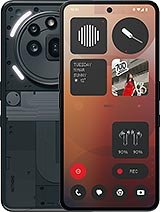
- The inclusion of a 3x optical zoom periscope telephoto lens on a device in this segment is a notable advantage for photographic versatility.
👎 Cons
- The plastic frame, despite the glass front and back, suggests a compromise in premium build quality compared to all-metal alternatives.
- The Snapdragon 7s Gen 3 chipset, while capable, is not a flagship-tier processor and may show limitations in very demanding applications over time.
- The resolution of 1080 x 2392 pixels results in a pixel density that is adequate but not as sharp as some higher-end competitors.
Expert Review & Rating
Market Position in 2026
As we navigate 2026, the Nothing Phone (3a) Pro, released in March 2025, finds itself firmly in the used market, or perhaps still available as new old stock. Its initial positioning as a mid-range contender meant it offered a compelling feature set for its original price point. Today, a year post-launch, its value proposition shifts. For those seeking a capable device without the premium price tag of current flagships, this phone remains a logical consideration, particularly if found at a discounted rate. Its software commitment, with upgrades up to Android 16, ensures it won’t be immediately obsolete.
Hardware & Performance Analysis
The Nothing Phone (3a) Pro is equipped with the Qualcomm SM7635 Snapdragon 7s Gen 3 (4 nm) chipset. Based on this architecture, we’re looking at a processor designed for efficiency and competent daily performance rather than raw, unbridled power. The octa-core CPU, with its mix of Cortex-A720 and Cortex-A520 cores, suggests a balanced approach to tasks, handling typical applications and moderate multitasking with ease. Theoretically, the Adreno 810 GPU should manage most contemporary mobile games at respectable frame rates, though it’s unlikely to sustain peak performance in graphically intensive titles over extended periods. RAM configurations, up to 12GB, are generous for the segment, contributing to smooth application switching and background process management. However, this is not a chipset built to compete with the top-tier Snapdragon 8 Gen series or Apple’s A-series processors; its limitations would likely become apparent in highly demanding computational tasks or advanced AI processing.
Strengths on the Spec Sheet
One undeniable strength of the Nothing Phone (3a) Pro lies in its display. The 6.77-inch AMOLED panel, with its 120Hz refresh rate and 1 billion colors, promises a fluid and visually rich experience. The stated 3000 nits peak brightness is particularly noteworthy; this level of luminosity ensures excellent readability even under direct sunlight, a practical advantage often overlooked. Furthermore, the inclusion of a 50 MP periscope telephoto lens with 3x optical zoom is a significant differentiator in this price bracket. This hardware choice offers genuine photographic flexibility, allowing for detailed distant shots that many competitors simply cannot achieve with digital zoom alone. Finally, the 5000 mAh battery capacity, coupled with 50W wired charging that can reach 100% in under an hour, positions this device as a strong contender for users prioritizing endurance and quick power-ups.
Technical Trade-offs
Despite its strengths, the Nothing Phone (3a) Pro exhibits clear technical trade-offs, primarily driven by its mid-range positioning. The choice of a plastic frame, while contributing to a lighter weight, inherently reduces the premium feel and perceived durability compared to devices featuring aluminum or stainless steel. This material decision, while common, is a tangible corner cut. Furthermore, while the Snapdragon 7s Gen 3 is capable, it’s not a flagship processor. This means that over a longer lifespan, or with increasingly demanding software, users might experience a performance ceiling sooner than with a more powerful chipset. The display, while bright and fluid, maintains a 1080 x 2392 pixel resolution, resulting in a ~387 ppi density. While adequate for most, it’s not as razor-sharp as higher-resolution panels found in some premium devices, which could be noticeable to users accustomed to denser displays. The lack of a microSD card slot also limits storage expansion, forcing users to rely solely on the internal memory configuration they initially purchase.
Buying Advice & Verdict
The Nothing Phone (3a) Pro, in 2026, stands out for its exceptionally bright AMOLED display and versatile periscope telephoto lens, yet it’s grounded by a practical, but not cutting-edge, plastic frame. For those in the used market, seeking a device with a strong display and capable camera system without breaking the bank, this phone presents a compelling, value-oriented option.
Frequently Asked Questions (FAQs)
The primary trade-offs are the plastic frame, which isn’t as premium as metal, and the Snapdragon 7s Gen 3 chipset. While capable, it’s a mid-range processor, meaning it won’t offer the same raw power or long-term performance headroom as flagship silicon. Also, the display resolution, while good, isn’t ultra-sharp compared to some higher-end phones.
Based on the Snapdragon 7s Gen 3’s architecture, it’s designed for efficiency. While it should handle most games well, sustained heavy gaming sessions will likely see some performance throttling to manage thermals, as is common with non-flagship chipsets. It’s not built for competitive, extended high-fidelity gaming at peak performance.