
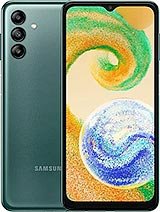
👍 Pros
- Large 5000mAh battery capacity for extended usage
- Dedicated microSDXC slot for expandable storage
- 90Hz display refresh rate, uncommon for its original price segment
- Upgradable to Android 14, providing recent software features
👎 Cons
- Exynos 850 (8 nm) chipset is significantly underpowered for 2026 standards
- Low 720p display resolution results in a less sharp viewing experience
- Limited internal storage and RAM configurations by 2026 standards
- Basic 5MP selfie camera with 720p video recording
- Slow 15W wired charging for a 5000mAh battery
Expert Review & Rating
Market Position in 2026
The Samsung Galaxy A04s, released in late 2022, now exists predominantly in the used or refurbished market in 2026. Its hardware specifications, particularly the processor and display resolution, position it significantly below current entry-level smartphones, which typically offer more robust chipsets and higher-resolution screens. While it may still function for basic communication and light tasks, its viability as a primary device is limited given the advancements in budget smartphone technology over the past four years.
The Best Features
The most compelling feature of the Galaxy A04s is its 5000mAh battery, which, paired with the relatively low-power Exynos 850 chipset and 720p display, suggests reliable all-day endurance for average tasks. Another notable aspect is the 90Hz PLS LCD display, offering a smoother visual experience than the standard 60Hz panels often found in its original price bracket. The inclusion of a dedicated microSDXC slot provides flexible and inexpensive storage expansion, which is beneficial for users with extensive media libraries. The ability to upgrade to Android 14 with One UI 6.1 ensures access to more recent software features and security updates, extending its functional lifespan.
The Compromises
The primary compromise is the Exynos 850 (8 nm) chipset, which, by 2026 standards, will struggle with anything beyond the most basic applications. This will likely manifest as noticeable delays in app loading, slower multitasking, and a less responsive user interface. The 720 x 1600 pixel display, while offering 90Hz, has a low pixel density (~270 ppi), resulting in less sharp text and images compared to modern alternatives. The 5MP f/2.2 wide selfie camera and the absence of OIS on the main 50MP sensor indicate significant limitations in photographic capabilities, especially in challenging lighting conditions. The 15W wired charging for a 5000mAh battery means lengthy charging times.
Performance & Daily Usage
Given the Exynos 850 (8 nm) chipset, general UI navigation and app launches will likely exhibit considerable latency in 2026. Basic communication apps and web browsing should function, but users should anticipate delays. The 4GB RAM ceiling will limit the number of applications that can run concurrently without background processes being terminated. Thermal management, based on the low-power chipset, is unlikely to be a significant issue, but sustained heavy use is not its intended purpose. The 50MP main camera, while numerically high, will likely produce images suitable for casual social media sharing in good lighting, but detail and dynamic range will be limited. The 5000mAh battery, combined with the modest hardware, suggests that users focused on battery life over performance might find it adequate for a full day’s use.
Buying Advice
This phone is primarily suitable for users seeking an extremely budget-friendly, secondary device for basic communication or as a first smartphone for a child, exclusively on the used market. Individuals requiring modern performance, a sharp display, or capable photography should strongly consider newer, even entry-level, alternatives released in 2025 or 2026.
Frequently Asked Questions (FAQs)
In 2026, the Samsung Galaxy A04s is only worth considering as an absolute budget option on the used market for very light, non-demanding tasks like basic calls and messaging. Its hardware is significantly outdated compared to current entry-level smartphones, making newer alternatives a better investment for most users.
Based on the hardware, the 50 MP main camera with an f/1.8 aperture and the absence of Optical Image Stabilization (OIS) suggests limited performance in low-light conditions. Images would likely exhibit significant noise and a lack of detail, making it unsuitable for high-quality low-light photography in 2026.