
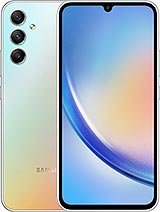
👍 Pros
- Large Super AMOLED display with 120Hz refresh rate for fluid visuals.
- 5000mAh battery capacity suggests reliable all-day endurance.
- IP67 dust/water resistance provides a degree of protection against elements.
- OIS on the main camera enhances stability for photos and videos.
- Guaranteed software updates up to Android 17 (One UI 8.5 to One UI 12.5) provides extended usability.
👎 Cons
- Mediatek Dimensity 1080 (6nm) chipset is an older mid-range processor by 2026 standards, limiting sustained high-performance tasks.
- Relatively slow 25W wired charging, especially compared to modern budget phones.
- Plastic frame and back materials may feel less premium than glass or metal alternatives.
- Absence of a 3.5mm headphone jack, requiring USB-C adapters or wireless audio.
- USB Type-C 2.0 port offers slower data transfer speeds compared to USB 3.0 or higher.
Expert Review & Rating
Market Position in 2026
In 2026, the Samsung Galaxy A34 is primarily a used or refurbished market device, offering a budget-friendly entry into the Android ecosystem. Its hardware, while competent at launch, now positions it below current mid-range offerings, making it a viable option for those prioritizing cost over cutting-edge features.
Performance & Daily Usage
The Mediatek Dimensity 1080 (6nm) chipset, while adequate for general web browsing, social media, and light applications, will exhibit noticeable limitations in 2026 with demanding games or complex multitasking. UI responsiveness, particularly with the One UI 8.5 (or later, given the update promise), should remain acceptable for basic navigation, but users accustomed to modern flagship-level fluidity may perceive minor delays. Given the 6nm process, thermal management is unlikely to be a significant issue for typical usage, but sustained heavy loads could lead to performance throttling as the chip is pushed beyond its comfortable limits.
The Compromises
The most significant compromise by 2026 is the Mediatek Dimensity 1080 chipset; while capable for its time, it now struggles to compete with the efficiency and raw power of contemporary budget and mid-range processors. The 25W charging speed is another notable drawback, as many current entry-level devices offer significantly faster charging. The plastic build, while durable, does not offer the premium feel of glass or metal designs found in newer alternatives. Additionally, the USB Type-C 2.0 port limits data transfer speeds, which can be a minor inconvenience.
The Best Features
The 6.6-inch Super AMOLED display with a 120Hz refresh rate remains a strong selling point, providing vibrant colors and smooth visuals that enhance the user experience for media consumption and general navigation. The 5000mAh battery capacity, paired with the 6nm chipset, suggests reliable all-day endurance for average tasks, a critical feature for many users. The inclusion of Optical Image Stabilization (OIS) on the 48MP main camera is a significant advantage, helping to reduce blur in photos and stabilize video, a feature often absent in budget phones even in 2026. Furthermore, Samsung’s commitment to four major Android upgrades means this device, originally on Android 13, could receive updates up to Android 17 (One UI 12.5), providing extended software longevity and security.
Buying Advice
The Samsung Galaxy A34 in 2026 is best suited for budget-conscious users seeking a reliable secondary device or a primary smartphone for light usage, particularly if purchased on the used or refurbished market at a significantly reduced price. Those requiring strong gaming performance, cutting-edge camera capabilities, or rapid charging speeds should explore newer mid-range alternatives.
Frequently Asked Questions (FAQs)
The Samsung Galaxy A34 can be a worthwhile purchase in 2026 if found at a very low price on the used or refurbished market, particularly for users prioritizing a good display, decent battery life, and extended software support over raw performance for demanding applications.
Based on the hardware, the 48 MP main camera with OIS and an f/1.8 aperture has a reasonable light-gathering capability for its class. However, without a larger sensor or advanced computational photography features found in newer devices, its low-light performance will likely be adequate for casual use but may struggle to produce highly detailed or noise-free images in very dim conditions compared to more modern camera systems.