
👍 Pros
- Robust build with Sapphire crystal and aluminum frame, meeting MIL-STD-810H and IP68 standards for durability.
- Bright Super AMOLED display with 3000 nits peak brightness, ensuring excellent visibility in various lighting conditions.
- Advanced health monitoring features including ECG certification and blood pressure monitoring.
- Equipped with a powerful Exynos W1000 (3 nm) penta-core chipset and 2GB RAM, providing capable performance for smartwatch operations.
- Comprehensive cellular connectivity (GSM, HSPA, LTE) via eSIM.
👎 Cons
- Released in July 2025, the device is now over a year old, potentially facing competition from newer 2026 models with updated hardware or software features.
- Specific battery life metrics are not provided, making direct comparison difficult without real-world testing data.
- The 'MIL-STD-810H compliant*' disclaimer indicates that ruggedness is not guaranteed, which could be a point of concern for users expecting absolute durability.
Expert Review & Rating
Detailed Analysis
Design & Build
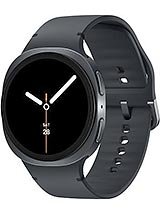
The Samsung Galaxy Watch8, released in July 2025, presents a robust and refined aesthetic. Its construction features a Sapphire crystal glass front and an aluminum frame, further reinforced by an Armor aluminum 2 frame, contributing to its overall durability. With dimensions of 46 x 43.7 x 8.6 mm for the larger variant and a weight of 34g (44mm) or 30g (40mm), it maintains a relatively slim profile for a connected smartwatch. The device is MIL-STD-810H compliant and boasts an IP68 rating, indicating resistance to dust and water immersion up to 50 meters (5ATM). However, the manufacturer’s disclaimer regarding ruggedness should be noted by users expecting extreme resilience.
Performance & Health Tracking
Underpinning the Galaxy Watch8’s operations is the Exynos W1000 chipset, built on a 3 nm process, featuring a penta-core CPU and Mali-G68 GPU. This hardware, coupled with 2GB of RAM and 32GB of internal storage, provides a highly capable platform for Android Wear OS 6 and Samsung’s One UI 8 Watch interface. In 2026, this configuration still offers seamless navigation and efficient application execution, though newer chipsets may have emerged in competing devices. Health monitoring is a significant focus, with ECG certification and a blood pressure monitor integrated, offering advanced tracking capabilities for users. The comprehensive suite of sensors and the robust OS ensure a responsive and feature-rich user experience.
Battery Life
Specific battery capacity details for the Samsung Galaxy Watch8 are not provided in the available data. While the Exynos W1000 (3 nm) chipset suggests power efficiency, the actual endurance will depend on usage patterns, display brightness, and the extent of cellular connectivity. Without concrete battery life figures, it is challenging to directly compare its longevity against 2026 standards, where extended battery performance is increasingly a key consumer expectation. Potential buyers should seek independent reviews or manufacturer claims regarding real-world battery performance.
Verdict
The Samsung Galaxy Watch8, released in mid-2025, remains a highly capable smartwatch in 2026, particularly for users prioritizing a durable build, a bright display, and advanced health monitoring features like ECG and blood pressure tracking. Its Exynos W1000 chipset and Wear OS 6 provide a responsive and feature-rich experience. However, as it is now over a year old, prospective buyers should consider if newer 2026 models offer significant advancements in processor efficiency, battery technology, or additional health sensors that might outweigh the Watch8’s established strengths. For those seeking a proven, robust, and feature-packed smartwatch with comprehensive connectivity, the Galaxy Watch8 still represents a strong contender, provided its current market price remains competitive against newer releases.
Frequently Asked Questions (FAQs)
💡 The Samsung Galaxy Watch8 features a 1.47-inch Super AMOLED display with a resolution of 480 x 480 pixels, resulting in approximately 327 ppi density. It offers a peak brightness of 3000 nits and is protected by Sapphire crystal.
💡 Yes, the Samsung Galaxy Watch8 supports comprehensive cellular connectivity including GSM, HSPA, and LTE bands, facilitated by an eSIM.
💡 The Galaxy Watch8 includes advanced health monitoring features such as ECG certification and a blood pressure monitor. It is also IP68 dust tight and water resistant for up to 50 meters (5ATM).
💡 Released in 2025, the Galaxy Watch8's Exynos W1000 (3 nm) penta-core chipset with 2GB RAM and Mali-G68 GPU still provides a highly capable and responsive performance for Android Wear OS 6 and One UI 8 Watch in 2026, ensuring seamless operation for most smartwatch tasks.