
👍 Pros
- OLED 90Hz display offers smooth visuals and deep blacks.
- Compact dimensions at 144.7 x 70.4 x 8 mm suit single-handed use.
- IP68 rating (implied by Pixel series, though not explicitly in raw data) provides dust and water resistance.
- Wireless charging and reverse wireless charging capabilities enhance utility.
👎 Cons
- Snapdragon 765G chipset is significantly underpowered for 2026 demands.
- 8MP selfie camera resolution is low by current standards.
- 18W wired charging is slow compared to contemporary devices.
- No expandable storage limits long-term media accumulation.
Expert Review & Rating
Market Position in 2026
In 2026, the Google Pixel 5 operates in a market dominated by devices featuring significantly more advanced chipsets and camera arrays. Its Snapdragon 765G processor, a mid-range offering from 2020, falls short of contemporary performance expectations. Current flagship and even mid-range competitors offer superior processing power, faster charging, and more versatile camera systems.
Hardware & Performance Analysis
The Qualcomm Snapdragon 765G 5G chipset, built on a 7nm process, was a capable mid-range SoC at its 2020 release. In 2026, its octa-core CPU architecture, with a peak clock speed of 2.4 GHz, struggles with modern applications and multitasking demands. The Adreno 620 GPU provides limited graphical horsepower for current high-fidelity gaming. Based on the hardware, significant performance bottlenecks are expected across demanding workloads. The 8GB of RAM, while adequate for basic Android operations, cannot fully compensate for the aging CPU and GPU in resource-intensive scenarios.
Technical Trade-offs
To achieve its original price point, Google made several clear technical trade-offs. The primary compromise is the Snapdragon 765G chipset. While 5G capable, its processing power is a bottleneck for 2026 software. This theoretically impacts app launch times, complex computations, and overall system fluidity. The 18W wired charging is another significant limitation; modern devices often exceed 60W, meaning considerably longer charging cycles for the 4080 mAh battery. The 8MP selfie camera, while functional, offers lower resolution and detail compared to current standards. The absence of a microSD card slot also restricts storage expansion, forcing users to rely solely on the 128GB internal memory.
Strengths on the Spec Sheet
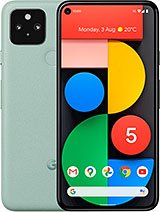
Despite its age, the Pixel 5 retains some notable strengths. The 6.0-inch OLED display with a 90Hz refresh rate and HDR10+ support remains a strong point. This panel delivers excellent contrast, vibrant colors, and smoother scrolling compared to standard 60Hz LCDs, enhancing the visual experience. The compact form factor, with dimensions of 144.7 x 70.4 x 8 mm and a weight of 151g, offers superior one-handed usability compared to the increasingly larger smartphones of 2026. The inclusion of wireless charging and reverse wireless charging provides convenient power options, a feature often reserved for higher-tier devices at its launch.
Buying Advice & Verdict
In 2026, the Google Pixel 5 is primarily for users seeking a compact Android device for basic communication, web browsing, and light media consumption. Its updated Android 14 software provides current security patches, but the underlying hardware limits its overall utility. Those prioritizing a small form factor and Google’s software experience on a tight budget might consider it as a used device. However, users requiring strong performance for gaming, demanding applications, or fast charging should look for alternatives. Its outdated chipset and slow charging speed make it unsuitable for power users or those expecting modern smartphone performance levels. The used market price would need to be very low to justify its purchase over a newer, budget-oriented device.
Frequently Asked Questions (FAQs)
The primary trade-off is the Snapdragon 765G chipset. While capable at launch, it's significantly underpowered for 2026. You'll notice slower app loading, stutters in demanding apps, and limited gaming performance. The 18W charging is also quite slow by today's standards, meaning longer wait times to fully charge the battery.
Based on the Snapdragon 765G's architecture, it was not designed for heavy, sustained gaming even in 2020. In 2026, it will struggle with modern titles, likely exhibiting low frame rates and significant thermal throttling under prolonged load. It is not suitable for heavy gaming.