
👍 Pros
- Robust build quality featuring sapphire crystal glass and a stainless steel frame.
- ECG certification provides advanced heart health monitoring capabilities.
- Retina LTPO OLED display offers excellent clarity and peak brightness of 1000 nits.
👎 Cons
- The Apple S4 processor and 1GB RAM are significantly underpowered for 2026 smartwatch demands, potentially leading to performance bottlenecks.
- Battery life of approximately 18 hours is considerably below current 2026 industry standards, requiring frequent recharging.
- Discontinued status limits future software support and availability of new features.
Comprehensive Review & Rating
Detailed Analysis
Design & Build
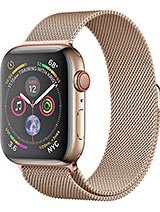
The Apple Watch Series 4, despite its 2018 release, presents a commendable design and build quality. Its construction features a sapphire crystal glass front, a ceramic and sapphire crystal back, and a stainless steel frame, contributing to a robust and premium feel. The device is rated for 50m water resistance, making it suitable for swimming and other water-based activities. These physical attributes remain competitive even in 2026, offering durability that many contemporary smartwatches strive for.
Display & Performance
The 1.78-inch Retina LTPO OLED display, with its 448 x 368 pixel resolution and 1000 nits peak brightness, still delivers excellent visual clarity and outdoor readability. However, its performance metrics are notably dated when evaluated against 2026 standards. The Apple S4 SiP processor, coupled with 1GB of RAM, struggles with the demands of modern watchOS versions and complex applications. Users in 2026 would likely experience noticeable lag and slower app loading times compared to current-generation smartwatches, which feature significantly more powerful chipsets and greater RAM capacities.
Health Tracking & Battery
The Series 4 was groundbreaking for its inclusion of an Electrical Heart Sensor (ECG), alongside an optical heart sensor, accelerometer, gyroscope, and barometric altimeter. These health tracking capabilities, particularly the ECG, remain relevant and valuable in 2026 for comprehensive health monitoring. However, the battery life, rated at approximately 18 hours from its 292 mAh capacity, is a significant drawback. Modern smartwatches in 2026 typically offer multi-day battery life, rendering the Series 4’s daily charging requirement a considerable inconvenience for contemporary users.
Final Verdict
For a prospective buyer in 2026, the Apple Watch Series 4 represents a compromise. While its build quality, display, and core health tracking features, especially the ECG, retain some appeal, its performance and battery life are substantially outmoded. The discontinued status further limits its long-term viability for software updates and access to the latest features. Therefore, for users prioritizing current performance, extended battery life, and future-proof technology, investing in a more recent smartwatch model would be a more judicious decision.
Frequently Asked Questions (FAQs)
💡 Yes, the Apple Watch Series 4 retains valuable health tracking features, including an ECG, optical heart sensor, and activity monitoring, which remain functional and relevant for basic health insights in 2026.
💡 The Apple Watch Series 4's Apple S4 processor and 1GB RAM are significantly less powerful than processors found in smartwatches released in 2026, resulting in slower performance, longer app loading times, and potential limitations with newer watchOS features.
💡 The Apple Watch Series 4 offers approximately 18 hours of battery life from its 292 mAh capacity. This is considerably shorter than the multi-day battery life typically offered by smartwatches available in 2026, necessitating daily recharging.